Project
W. A. Mozart: The Piano Trios after the autograph
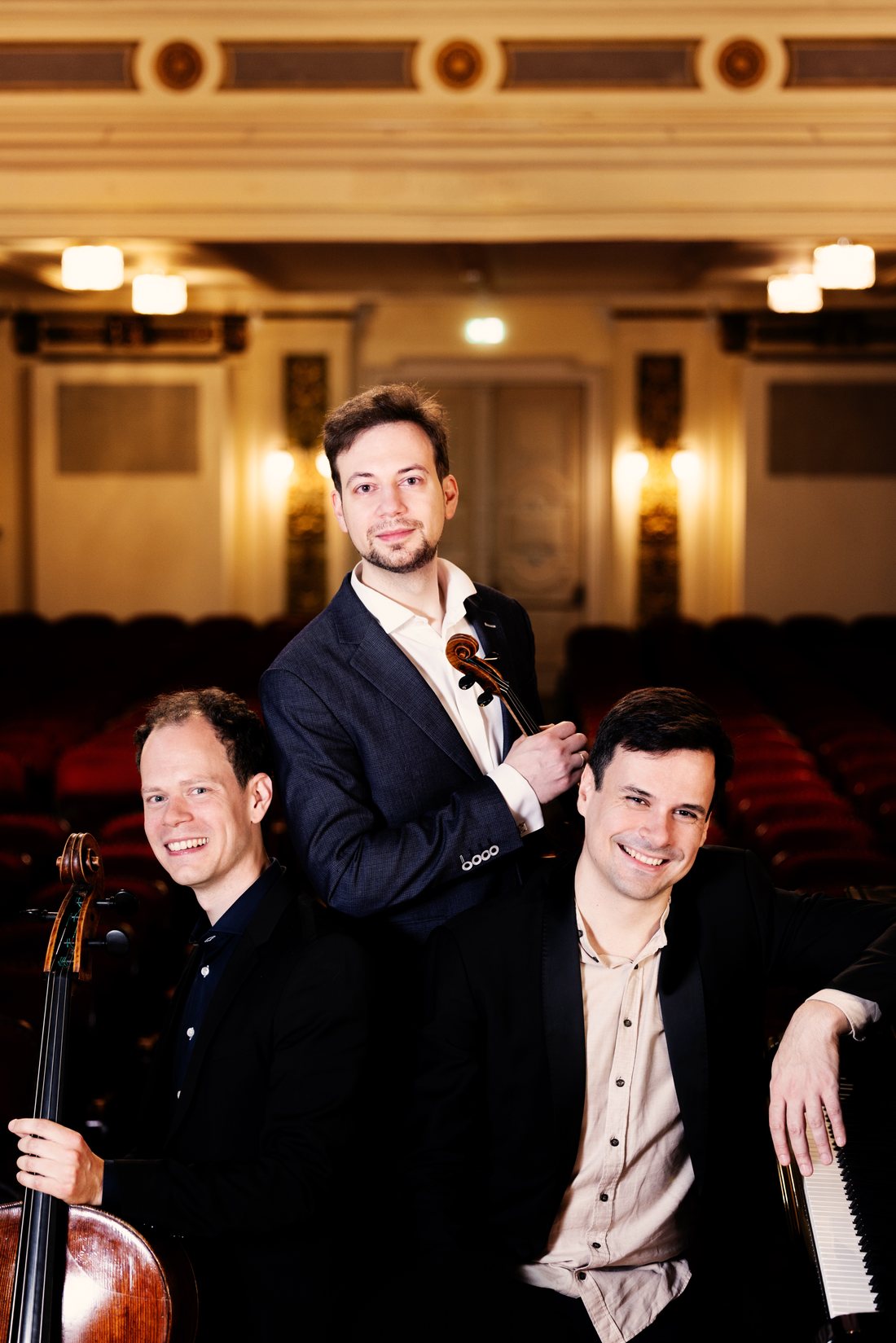
Vienna Mozart Trio · Gramola, autumn 2021.
The newly released CD of all of Mozart’s works for piano trio rests on decades of performing experience of the Vienna Mozart Trio and on the composer’s original manuscripts. For the first time all errors in the customary editions have been corrected. The recordings were made at the Wavegarden studio in Lower Austria between February and April 2018; the finished album appeared as a double CD in autumn 2021 on Gramola.
For about ten years I have appeared regularly with my parents Irina and Diethard Auner in Europe’s most important centres of chamber music. The Vienna Mozart Trio was founded in 1991 and — nomen est omen — has played Mozart’s piano trios continuously in hundreds of concerts around the world.
One of my earlier recording projects, the CD Dialog mit Mozart with three sonatas for piano and violin, made with the British pianist Robin Green at the Mozarteum Salzburg, was already devoted to Mozart’s chamber music. Even then we spent countless hours in the library of the University Mozarteum Salzburg checking the manuscripts — and comparing them with today’s customary Urtext editions from Bärenreiter and the Neue Mozart-Ausgabe. The differences between autograph, first printing and NMA were very marked; we often asked ourselves why our present performing tradition departs so far from the text actually available.
One of the first striking features of the autograph is the different arrangement of the instruments on the page: the violin at the top, the piano in the middle — and the cello only beneath the piano part. Why? The pianos and harpsichords of Mozart’s time were very small, and Mozart often had his own instrument transported. The trio therefore also played in a different seating arrangement: the cello on the left, the violin on the right, probably standing in front of the piano. Because of the instrument’s small size the piano lacked a strong bass; the cello was therefore mostly used to reinforce the pianist’s left hand.
We gave several concerts at the Musical Instruments Museum in Brussels. Before the collection moved into the new exhibition rooms and the valuable instruments disappeared into glass cases, we were invited to play on them. The fortepiano was something quite special, and expensive. It has leather-covered hammers and thin, harpsichord-like strings, and a far lighter case construction than the modern piano. The action and hammers are lighter, which gives a much lighter touch that, in well-built fortepianos, is also very responsive. Mozart writes his trios — depending on who commissioned them and what instrument that person owned — for “pianoforte” or “cembalo”.
In the light of this instrumentation many questions that arise when looking at the manuscripts answer themselves: why, for instance, Mozart sometimes wrote no dynamics. A harpsichord did not have many dynamic possibilities.
Continue