Project
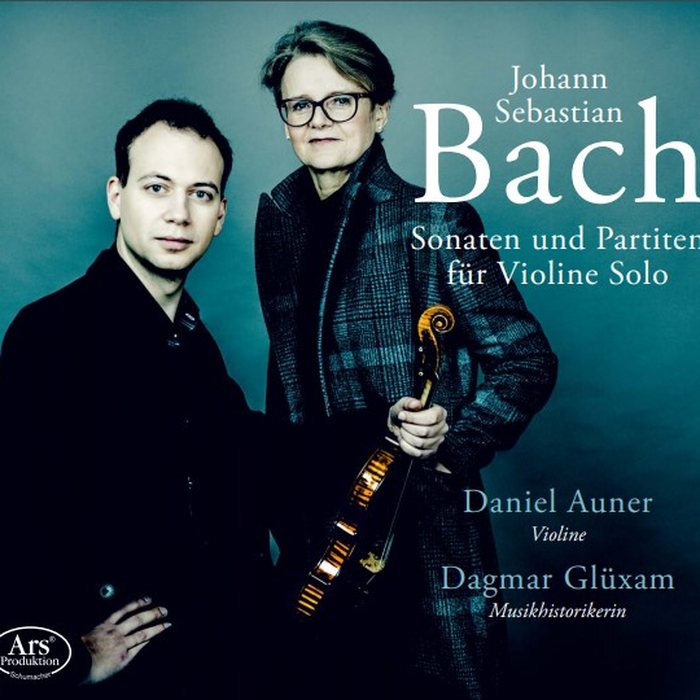
J. S. Bach: Sonatas and Partitas for solo violin
In training and in artistic collaboration with the Viennese musicologist and expert on affect theory, Dr Dagmar Glüxam.
Every violinist learns and studies the six sonatas for solo violin during their training, and normally this music accompanies us for the rest of our lives. Yet interpreting Bach’s music grows ever more difficult today, because we are fortunately becoming ever more aware of how differentiated the reception of this music was in its own time.
We are so used today to hearing certain works of Bach played in a meditative character that it has become a “tradition” to interpret, for instance, the Adagio of BWV 1001, the first piece of this cycle, very calmly and in a sustained manner. But if we turn our eyes to those rapid notes, those modulations and strong dissonances on the strong beats …
Sei Solo — be alone — might also mean that with these works he was coming to terms with the loss of his beloved wife Barbara Bach. Imagine hearing this Adagio played on an organ, Bach’s favourite instrument. Powerful in sound and full of dissonance. The affects Bach uses here draw a nervous, painful, sighing, agitated sound picture.
It happens rather rarely that musicians engage in collaboration with musicologists. As my close cooperation over several years with the Austrian music historian Dagmar shows, however, such a collaboration can be exceedingly stimulating and rewarding. She examined in detail the hitherto rather neglected subject of Baroque affect theory, while my task in this project was to translate her theoretical knowledge into sounding art.
What is this actually about? “One must play from the soul, and not like a trained bird”, wrote the German composer Carl Philipp Emanuel Bach in his keyboard treatise of 1753, striking — by no means by chance — exactly the nerve of the musical thinking of his time, a time not yet shaped primarily by technical virtuosity but by the expression of human emotions, the “affects”. The affect determined not only the composition as a whole but also its delivery: just as the composer was to imitate various affects musically in every piece, the performer’s task was to recognise them and to convey them to the listener precisely in the composer’s sense, and to touch them emotionally. Or, in the words of Michael Praetorius (1619), music should “move the heart of the listener and stir the affectus”.
Knowledge of Baroque affect theory, and the correct interpretation of the many elements of musical rhetoric, makes Bach’s Sei Solo appear no longer merely as challenging violin literature but rather as a fascinating image of the human soul, in which the expression of every single note truly matters. Saltus, gradus, exclamatio, suspiratio and many further secrets of the doctrine of affects.
Continue